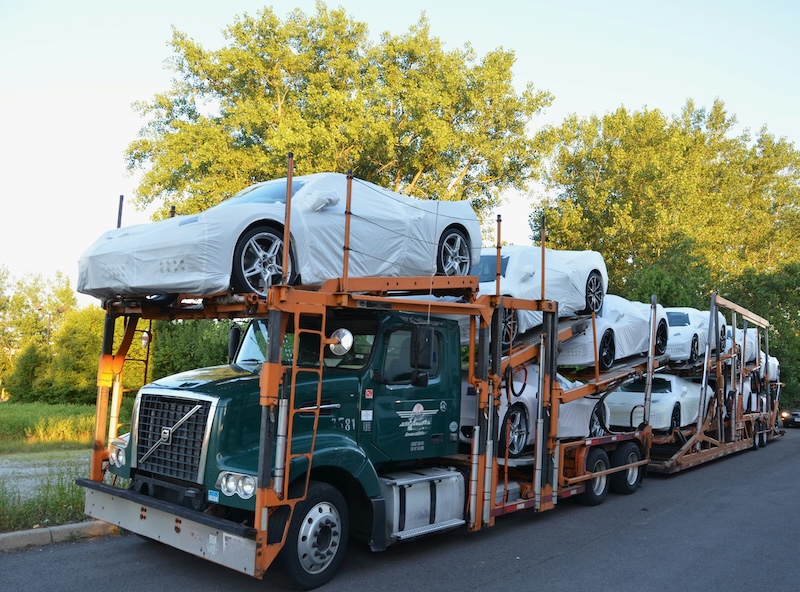
The most common question in car shipping is whether to go open or enclosed. For most people shipping a standard vehicle, the answer is simple. For others, it takes a bit more thought. Here is how to decide.
What Is Open Carrier Transport?
Open carrier is the standard method. Your vehicle is loaded onto an open multi-car trailer alongside other vehicles and transported to its destination exposed to the elements. It is the same method manufacturers use to move new cars from factories to dealerships.
Open carriers typically hold eight to ten vehicles. They are widely available, cost less than enclosed transport, and handle the vast majority of domestic shipments without issue.
What Is Enclosed Car Transport?
Enclosed transport moves your vehicle inside a covered trailer. Your car is protected from weather, road debris, and visibility during transit. Enclosed trailers typically hold two to six vehicles and are used primarily for high-value, exotic, classic, or condition-sensitive vehicles.
Enclosed transport costs more than open carrier — typically $200 to $500 more for the same route — and availability can be more limited on some routes.
The Main Differences
Cost
Open carrier is significantly cheaper. For a 1,000-mile route, you might pay $600 to $900 for open carrier and $900 to $1,400 for enclosed. The gap widens on longer routes.
Protection
Open carrier exposes your vehicle to weather and road debris. For most vehicles, this is not a problem; the vast majority of open carrier shipments arrive without any weather-related damage. For a freshly detailed exotic or a restored classic, the exposure is worth considering.
Availability
Open carriers are available everywhere and can usually be dispatched faster than enclosed. Enclosed transport has fewer carriers operating on any given route, which can mean longer wait times especially in less-populated areas.
Visibility
On an open carrier, your vehicle is visible to anyone who sees the truck. On an enclosed carrier, it is not. For high-value vehicles, reduced visibility during transport is an underappreciated benefit.
When Open Carrier Is the Right Choice
- Standard daily drivers and most passenger vehicles
- Budget-conscious shippers where cost is the primary factor
- Moves where timeline is important and availability matters
- Vehicles where minor cosmetic exposure is not a concern
The reality is that most cars shipped in the US travel on open carriers without incident. If you are shipping a car you drive every day, open carrier is almost always the practical choice.
When Enclosed Transport Is Worth It
- Luxury vehicles, exotics, and collector cars
- Classic or restored vehicles where cosmetic condition is critical
- Vehicles with very low ground clearance or custom bodywork
- Any vehicle where the cost of potential damage exceeds the enclosed premium
A useful rule of thumb: if your vehicle is worth more than $50,000, or if condition on arrival matters more than cost, enclosed is the right call.
A Note on Insurance
Choosing enclosed transport does not automatically mean more insurance coverage. Carrier insurance requirements are similar regardless of transport method. What enclosed does provide is a lower likelihood of weather or debris damage in the first place. See our guide to car shipping insurance for details on what is and is not covered.
Our Top Pick
RoadRunner Auto Transport offers both open and enclosed transport with vetted carriers and no deposit at booking. See our full ranking of the best car shipping companies.
Get a Free Quote →